Explore cafe and restaurant interior design ideas, layout tips and themes that attract diners in Noida. Plan your outlet with Ranjit Interior.
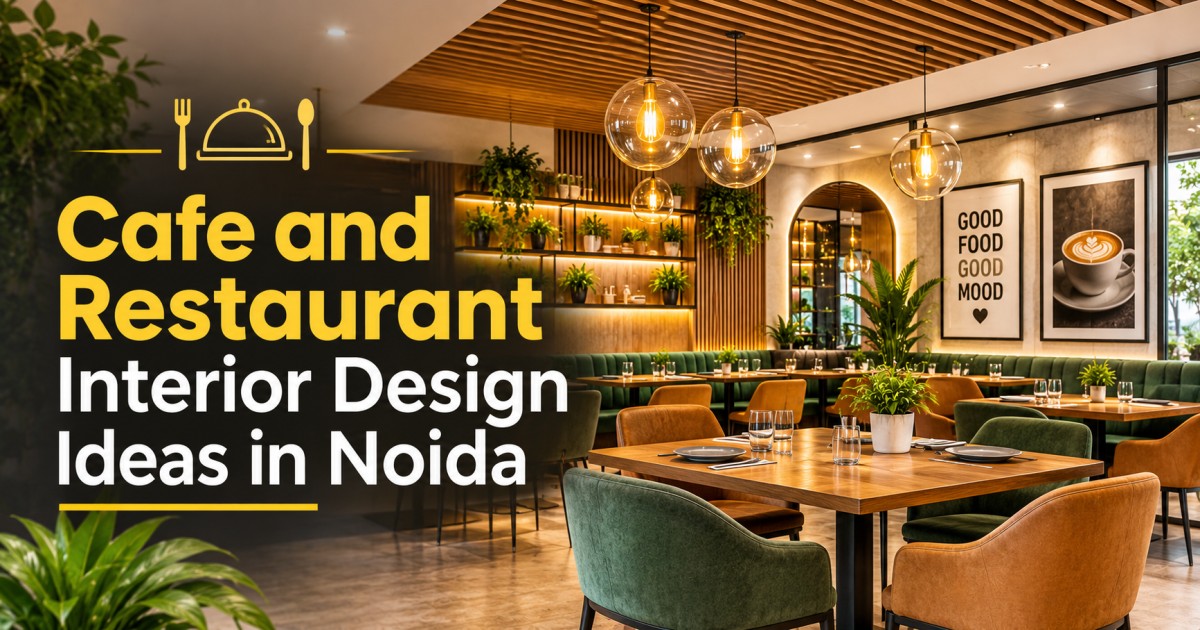
People choose where to eat partly by how a place feels. In a city with as many cafes and restaurants as Noida, interior design can give your business a competitive edge. A well-planned layout also helps protect your profits because it affects how many guests you can seat and how efficiently your staff can serve them. This guide explores the important decisions when planning cafe interior design in Noida or designing a complete restaurant.
Start by identifying your target audience and deciding what experience you want to create. A student-friendly cafe, a family restaurant and a premium dining space all require different seating arrangements, lighting styles and interior finishes. Choosing a clear concept helps you maintain a consistent look throughout the space.
Some popular cafe and restaurant interior design styles include:
Modern Minimal: Clean lines, neutral colour combinations, simple furniture and warm lighting create a contemporary atmosphere.
Industrial: Exposed textures, metal elements, brick walls and dark wooden finishes give the space an urban and stylish appearance.
Traditional Indian: Warm colours, handcrafted details, decorative patterns and rich fabrics create a welcoming cultural atmosphere.
Classic: Timeless furniture, elegant finishes and balanced colour combinations offer a sophisticated dining experience.
Greenery and Natural: Indoor plants, wooden elements and natural daylight create a relaxing environment for visitors.
Explore our guide to restaurant interior design themes to understand how different styles work in practice. Whatever concept you select, maintain consistency across your menu, uniforms, signage and packaging so that customers experience a complete brand identity.
A good restaurant layout makes it easy for guests and staff to move around without unnecessary interruptions. Plan separate movement paths for customers entering and leaving, servers carrying food between the kitchen and tables, and guests moving towards the washroom or billing counter.
Keep the kitchen, service counter and billing area close enough to support efficient operations while maintaining a comfortable distance from dining spaces to reduce noise and cooking smells. Proper planning also helps avoid overcrowded seating areas and improves the overall customer experience.
Read our restaurant layout planning guide for more information about kitchen-to-table distances, washroom placement and waiting areas.
Seating plays an important role in both customer comfort and restaurant profitability. Combine two-seater tables, four-seater tables and a few larger dining arrangements to accommodate different group sizes. Banquette and booth seating along walls can also help maximise available floor space.
Consider the type of dining experience you want to offer. A quick-service cafe may benefit from practical seating that supports faster table turnover, while a fine-dining restaurant should provide comfortable seating where guests can relax and spend more time.
Maintain sufficient space between tables so that customers and staff can move comfortably. Also, consider accessible pathways for wheelchair users and visitors with prams when planning the seating layout.
Lighting can completely change how a cafe or restaurant looks and feels. A combination of ambient, task and accent lighting creates depth while improving visibility throughout the space. Warm lighting works well for evening dining and premium restaurants, while brighter lighting is often suitable for daytime cafes and quick-service outlets.
Consider installing dimmable lights to adjust the atmosphere throughout the day. Pay special attention to counters and billing areas, where staff require sufficient illumination to perform their tasks comfortably.
Energy-efficient LED fixtures can also help control electricity consumption. The Bureau of Energy Efficiency provides information about appliance star ratings for products such as air conditioners and refrigerators used in commercial spaces. For more inspiration, explore our restaurant and cafe lighting ideas.
Cafes and restaurants experience regular foot traffic, food spills and frequent cleaning. Choosing durable materials is essential to maintain an attractive interior over time. Consider stain-resistant surfaces, hard-wearing flooring, washable wall finishes and furniture that is easy to maintain.
Proper ventilation and acoustic treatment also contribute to a comfortable dining environment. Excessive noise and poor air circulation can affect the customer experience, so plan these elements alongside the interior layout.
Glass and mirrors can make smaller cafes appear more spacious and visually appealing. Lacquered glass is another practical option for counters and feature walls because it provides a glossy, colourful finish that is easy to clean.
Hygiene and safety should be considered from the beginning of every restaurant interior project. In India, food businesses require registration or a licence from the Food Safety and Standards Authority of India, depending on their business category and applicable requirements.
The Food Safety and Standards Authority of India (FSSAI) website provides information about food safety regulations, while the FoSCoS portal is used for relevant registration and licensing applications.
Plan kitchen surfaces, drainage, food storage, ventilation and waste disposal carefully to support hygienic operations. Fire safety is equally important. Emergency exits, fire extinguishers and alarm systems should be considered alongside partitions, ceilings and furniture arrangements.
The Bureau of Indian Standards provides information about the National Building Code of India, while the National Disaster Management Authority offers general fire safety guidance. Always check the applicable local requirements and building permissions before starting construction.
A visually attractive cafe or restaurant gives customers another reason to remember your business and share their experience online. A distinctive feature wall, decorative lighting installation, attractive counter or creative seating area can become a recognisable part of your brand identity.
Consider creating one or two dedicated photo-friendly areas with good lighting and uncluttered backgrounds. Incorporate your restaurant name or logo naturally into the design so that customers can share photographs that also promote your business.
The cost of cafe and restaurant interiors depends on several factors, including the available floor area, material quality, kitchen equipment, furniture requirements, lighting and custom design elements. Before finalising the budget, identify the areas that have the greatest impact on customer experience, such as seating, lighting, counters and decorative features.
Prioritise these important elements while selecting materials and finishes that offer long-term durability. Read our detailed guide to cafe interior cost in India to understand the factors that influence project expenses.
Working with a compact space or limited budget? Our guide to small cafe interior design on a budget shares practical ideas to create an attractive space without unnecessary expenses.
The same principles of functionality, comfort, lighting and visual appeal also apply to other hospitality environments. Hotels require welcoming guest spaces, while banquet halls need flexible layouts that accommodate different types of events and gatherings.
Explore our guides on hotel interior design trends and banquet hall interior design for more inspiration and practical design ideas.
Ranjit Interior provides interior design solutions for cafes, restaurants, hotels and banquet halls. From space planning and furniture selection to customised interiors and complete fit-outs, our team focuses on creating attractive and functional hospitality spaces.
We also provide 3D design visualisations that help you understand the proposed layout, colours, materials and finishes before construction begins. Learn more about why 3D interior design matters.
Not sure how to select the right professional for your project? Read our guide on how to choose an interior designer in Noida and explore our service areas across Greater Noida and NCR.
Planning to open a new cafe, renovate an existing restaurant or upgrade your hospitality space? Contact Ranjit Interior and share your concept, available area and estimated budget. Our team can help you plan a practical layout and create an interior design that reflects your brand while delivering a comfortable dining experience.
Our expert calls you back within 2 hours with the best price.
No thanks, I'll browse on my own